Direct answer: The nine locations worth your time sit in three clusters: Dehradun itself, Mussoorie about 35 km up, and Rishikesh about 45 km east. Pick two for one day, not four. And check whether each one needs shoot permission rather than just an entry ticket, because at several of them those are different things.
The three clusters, and why that matters
Almost every shoot list for this region ignores the question that actually shapes your day: driving time. Dehradun, Mussoorie and Rishikesh each have good locations, but they point in different directions from the city.
Mussoorie is roughly 35 km away and uphill, so the drive takes longer than the distance suggests. Rishikesh is roughly 45 km in the other direction. Combine one Dehradun location with one from either cluster and you have a full day. Try to take in all three and you will spend it in a car with your outfits in the back.
The nine locations
| Location | What it gives you | What to know |
| Forest Research InstituteDehradun | The most recognisable backdrop in the region. A vast colonial facade, long arched corridors and lawns that run for acres. | Visitor entry is not shoot permission. A styled or commercial shoot needs separate written approval, and entry rates were revised in May 2026. Confirm equipment limits too; do not assume a drone is allowed. |
| Robber’s CaveGuchhupani, Dehradun | Water running between high rock walls. Dramatic, narrow and completely unlike anything else on this list. | You will be in water. Slippery stones, wet clothes and a change of footwear needed. Weekday mornings only, because weekends are crowded enough to make a shoot impossible. |
| SahastradharaDehradun | Terraced falls and sulphur springs, with water dropping over limestone ledges. | Early morning on a weekday, or not at all. It is busy and weather-sensitive, and the rocks are wet year round. |
| Mindrolling MonasteryClement Town, Dehradun | Colour that no other location here offers: the stupa, the gardens and the Buddha statue. | A working religious site. Ask permission properly, dress appropriately and keep the crew small. Some areas will be off limits regardless of what you are paying. |
| Maldevta and Old Mussoorie RoadDehradun outskirts | Riverbed, pine and quiet road bends. The least photographed and the most likely to look like nobody else’s shoot. | Much of it looks public and is not. Confirm land access, never set up on a blind bend, and check river conditions in and after the monsoon. |
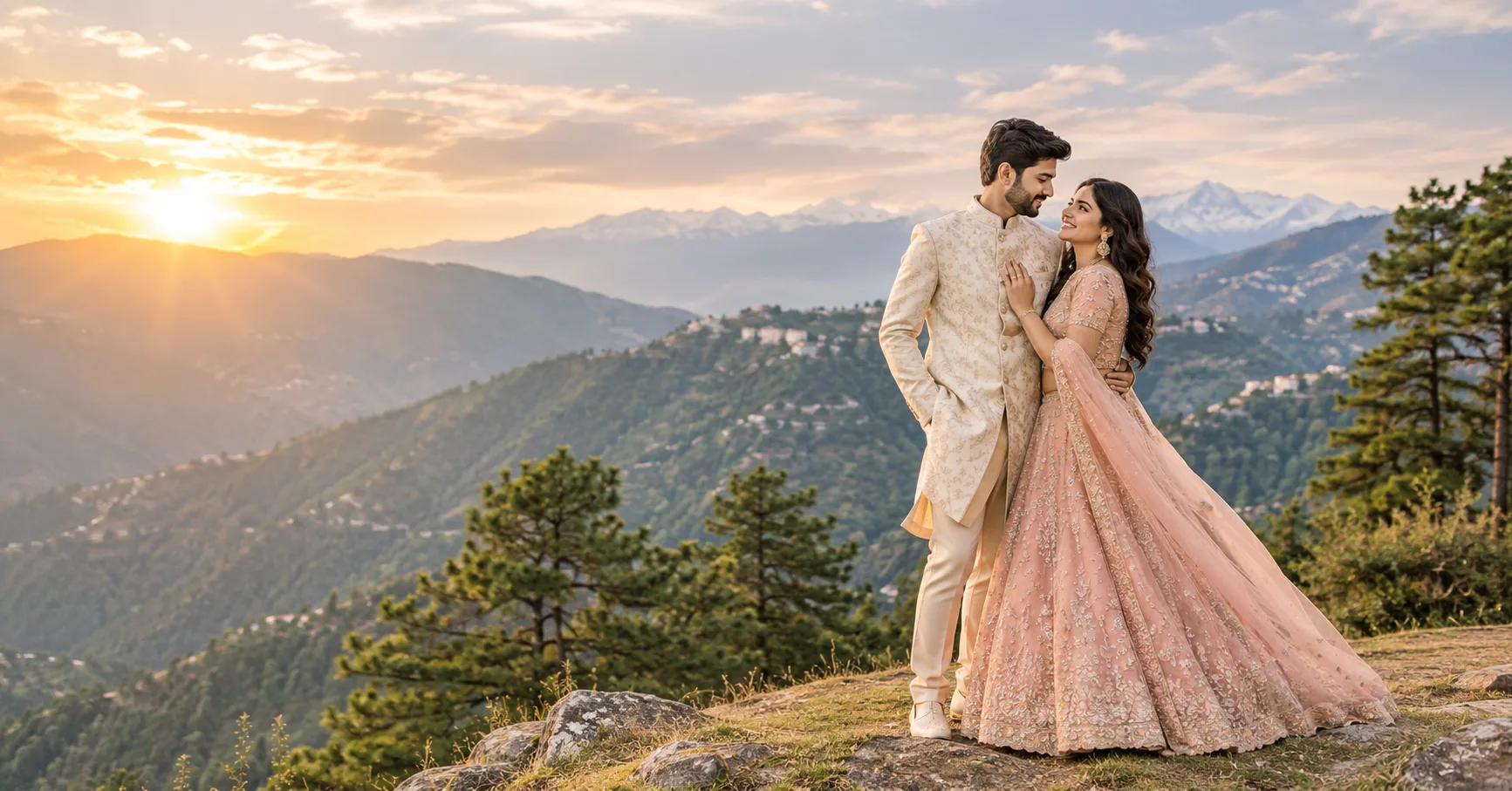
| George Everest HouseMussoorie, about 35 km | A ridge with sky on both sides and the best sunset on this list. | Windy, cold and exposed. Mussoorie access and tourist registration rules change, so check before the day rather than at the barrier. |
| Camel’s Back Road and Lal TibbaMussoorie | Hill-station character: iron railings, deodar, mist and colonial rooflines. | Narrow and shared with traffic and walkers. Early morning is the only realistic window. |
| Laxman Jhula and the ghatsRishikesh, about 45 km | The river, the bridges and the light off the water at either end of the day. | Public, free and busy. A small crew moving quickly works. A full setup does not. |
| Beatles AshramChaurasi Kutia, Rishikesh | Graffiti-covered meditation domes and a ruined ashram the jungle is taking back. The most distinctive interior option. | Ticketed entry, and a shoot is a different conversation from a visit. Confirm the current rate and whether your kit is permitted. |
Getting the timing right
Location choice gets the attention and timing does more of the work. The same spot photographs completely differently depending on the month and the hour.
| When | Why | |
| Best months | October to March | Clear air, low sun and comfortable temperatures. November to February is the strongest window, and it is also when most couples shooting for a spring wedding are free. |
| Months to avoid | June to September | Monsoon, with July and August the wettest. Riverside and waterfall locations become unusable and sometimes unsafe. |
| Best hours | First 90 minutes after sunrise | Soft light and empty locations. Every spot on this list is a different place at seven in the morning than at eleven. |
| Second best | The hour before sunset | Better for ridges and open ground than for anywhere narrow, since valleys lose their light early. |
If you are shooting for a wedding after Kharmas, from mid January to March, then November through to early January is when to do it. Your photographer is less booked, the light is at its best, and you are not squeezing a shoot into the fortnight before the wedding.
The permission question, which is where this goes wrong
This is what separates a shoot that happens from one that does not, and it is absent from almost every location list you will find elsewhere.
The core mistake is assuming that because a place is open to visitors, you can shoot there. At several of the locations above, a visitor ticket and a shoot permit are completely separate things, and the gap between them is usually discovered at the gate with a photographer on the clock and a makeup artist in the car.
Before you commit to any location, get answers to these six.
| Ask | Why it matters |
| Is this permission to visit or permission to shoot? | The most common and most expensive mistake. At several locations here the two are entirely separate, and turning up with a visitor ticket and a crew gets you turned away. |
| What is the current fee, confirmed this month? | Rates change and published figures online go stale fast. Get it from the location, in writing, not from a blog. |
| How many people may come in? | Couple, photographer, assistant, makeup artist and someone carrying a dress is already five. Several venues cap the number well below that. |
| Is a drone allowed? | Two separate approvals: an airspace check on Digital Sky and consent from whoever controls the site. Neither one covers the other. |
| Is there power, and somewhere to change? | Decides whether a full-day shoot with outfit changes is realistic or whether you are changing in a car. |
| What happens if it rains? | Settle the reschedule terms before you pay, not on the morning. |
For the public spots, the ghats at Rishikesh or a stretch of Old Mussoorie Road, the rule is different but still real. Nobody will stop a couple and a photographer moving quickly. A tripod, a light stand and six people blocking a path is a different proposition, and on a road it is a safety question rather than a permission one.
What we do about it
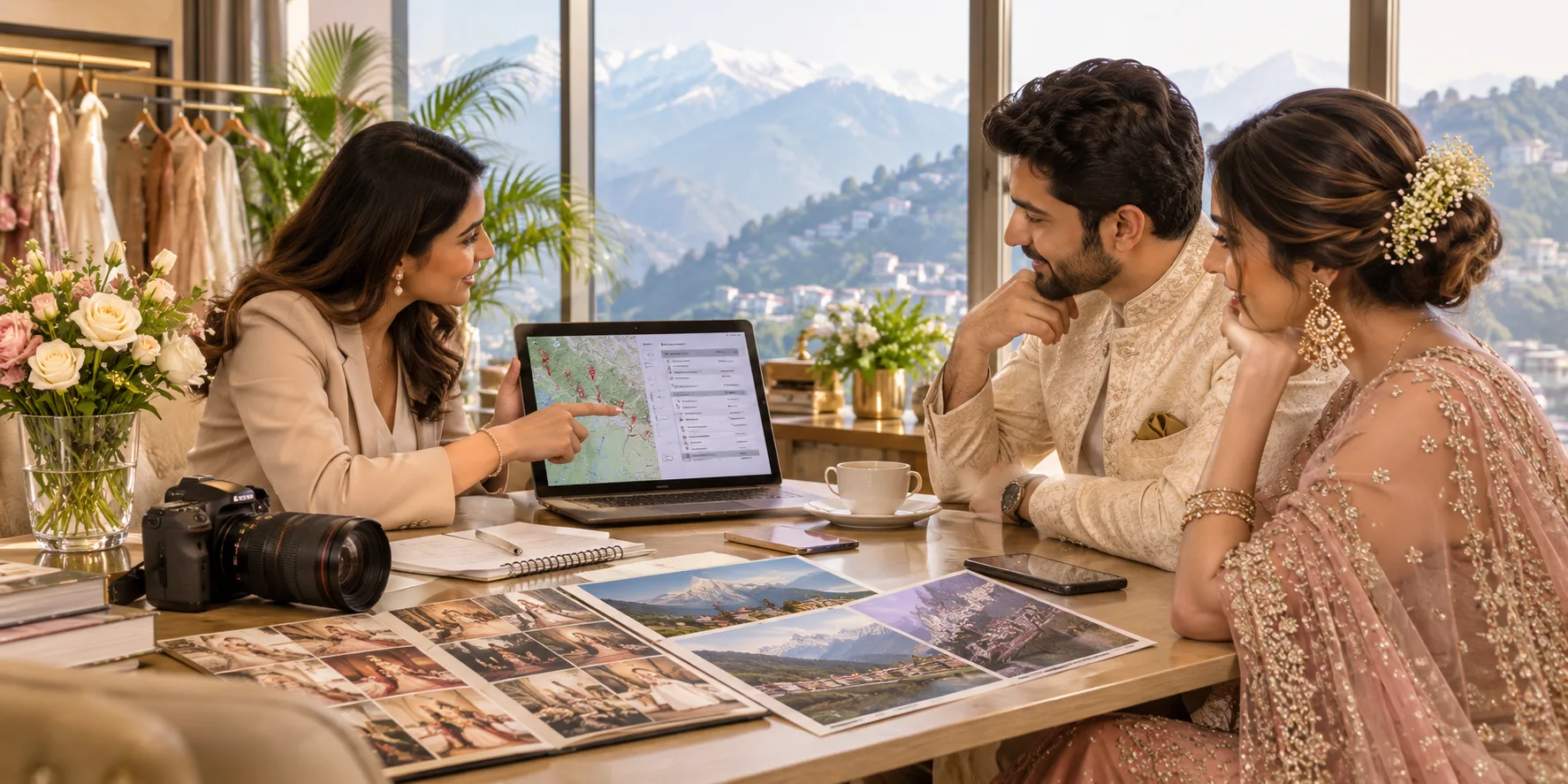
Location permissions are part of what we handle, because they fail the same way venue permissions do when nobody owns them. We confirm current rates rather than working from last year’s figures, settle crew limits and drone rules in writing, and build the running order around driving time.
We plan weddings across Dehradun, Mussoorie, Rishikesh and Haridwar, and the shoot is usually the first thing a couple does with us, well before the wedding itself.
Frequently asked questions
Do you need permission for a pre-wedding shoot in Dehradun?
For several of the locations here, yes. The important distinction is that a visitor ticket is not shoot permission. At the Forest Research Institute in particular, a styled or commercial shoot needs separate written approval, and entry rates were revised in May 2026. Public spaces such as the Rishikesh ghats need no permission for a small crew moving quickly, but a full setup with lighting changes that. Cafes, private villas and resorts always need written consent covering crew size, duration and power.
When is the best time of year for a pre-wedding shoot near Dehradun?
October to March, with November to February the strongest stretch. The air is clear, the light is low and the temperature is comfortable for long outdoor sessions. Avoid June to September, when the monsoon makes riverside and waterfall locations unusable and sometimes unsafe. July and August are the wettest.
How many locations can you cover in one day?
Two comfortably, three if they are close together and you start at sunrise. The limiting factor is almost never the shooting, it is the driving and the outfit changes. Mussoorie is about 35 km from Dehradun and Rishikesh about 45 km, so pairing one Dehradun location with one from either of those is a full day on its own.
Can you use a drone?
Only with two separate clearances: an airspace check on the Digital Sky portal and permission from whoever controls the site. One does not imply the other, and several locations on this list refuse drones outright regardless of airspace status. Settle it before the day, because a drone shot is not something you can improvise.
Which location is best if you only pick one?
The Forest Research Institute if you want the shot people recognise, Maldevta if you want one nobody else has, and the Rishikesh ghats if you want the river in it. The first needs the most paperwork and the second needs the most local knowledge, which is the trade-off in a sentence.
Planning a shoot
If your wedding is in the window after mid January, now is when to book the shoot. Call and tell us the two locations you are drawn to, and we will tell you which permissions they need and whether they fit in the same day. See the wedding packages if you are still putting the wider plan together.